Mikel Arteta ranks as the 7th-best Premier League manager of all time

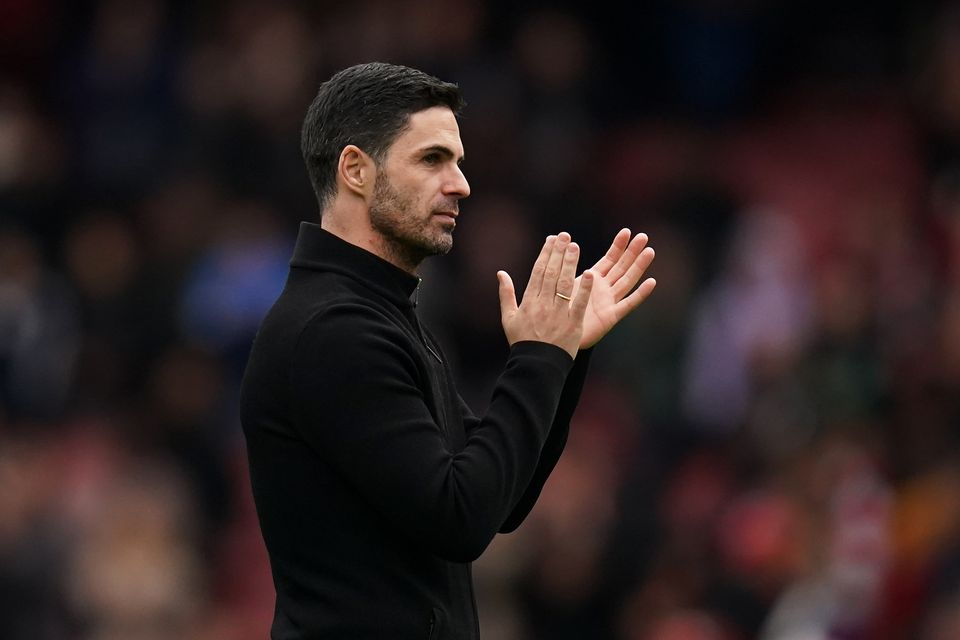
Bildbyran
Mikel Arteta’s rise to the top of the Premier League management ranks is evidence of both cultural change and tactical innovation. Due to his record-breaking stats and the extreme complexity of the “project” he took over in late 2019, several experts rate him eighth on the all-time list by 2026.
Arteta’s efficiency is the main justification for his high status. In just 326 games as Arsenal’s manager, Arteta achieved the historic milestone of 200 victories in early 2026. He surpassed even the great Arsène Wenger (58%) with a career victory percentage of 61.4%, the greatest in Arsenal’s history.
Additionally, he became the youngest manager in Premier League history to reach 100 victories in April 2024, demonstrating that his longevity is being built on an unparalleled start. Arteta’s rating takes into account the development of the game in addition to points. He rebuilt a broken, mid-table team into a formidable force that is on par with Pep Guardiola’s Manchester City.
His Arsenal team, which frequently leads the league in expected goals against (xGA) and clean sheets, has established itself as the model for defensive stability and positional play by the 2025–26 campaign.
Arsenal’s seventh-longest serving and the second-longest-serving current Premier League manager
Additionally, Arteta has overcome the psychological barrier of the “Big Six”. His record versus competitors is outstanding; by 2026, for example, he has won eight of only twelve North London Derbies, a victory percentage that has changed the balance of power in London.
Arteta’s ability to maintain a 2.14 points-per-game average across several seasons solidifies his position as the seventh-best, spanning the gap between the “old guard” and the contemporary masters, while luminaries like Alex Ferguson, Wenger, Guardiola, Mourinho, and Klopp hold the top slots.
Beyond the numbers, Arteta’s brutal transformation of Arsenal’s ethos defines his legacy. Prioritising “non-negotiables,” he moved past well-known players to assemble a team focused on technical adaptability and team spirit. By 2026, he has turned the Emirates Stadium into a stronghold where other top managers have been forced to modify their own strategies due to his tactical flexibility, which makes use of inverted full-backs and a very effective “box” midfield.
He goes from being a successful coach to a generational impact, solidifying his place among the league’s all-time greats, thanks to his ability to set the tactical trends of the league while consistently challenging state-funded giants for the championship.